Category: Child Abuse

  • Preventing Bullying Through Science, Policy, and Practice

    Publication

    Released: May 10, 2016

    Bullying has long been tolerated as a rite of passage among children and adolescents. There is an implication that individuals who are bullied must have “asked for” this type of treatment, or deserved it. Sometimes, even the child who is bullied begins to internalize this idea. For many years, there has been a general acceptance and collective shrug when it comes to a child or adolescent with greater social capital or power pushing around a child perceived as subordinate. But bullying is not developmentally appropriate; it should not be considered a normal part of the typical social grouping that occurs throughout a child’s life.

    Although bullying behavior endures through generations, the milieu is changing. Historically, bullying has occurred at school, the physical setting in which most of childhood is centered and the primary source for peer group formation. In recent years, however, the physical setting is not the only place bullying is occurring. Technology allows for an entirely new type of digital electronic aggression, cyberbullying, which takes place through chat rooms, instant messaging, social media, and other forms of digital electronic communication.

    Composition of peer groups, shifting demographics, changing societal norms, and modern technology are contextual factors that must be considered to understand and effectively react to bullying in the United States. Youth are embedded in multiple contexts and each of these contexts interacts with individual characteristics of youth in ways that either exacerbate or attenuate the association between these individual characteristics and bullying perpetration or victimization. Recognizing that bullying behavior is a major public health problem that demands the concerted and coordinated time and attention of parents, educators and school administrators, health care providers, policy makers, families, and others concerned with the care of children, this report evaluates the state of the science on biological and psychosocial consequences of peer victimization and the risk and protective factors that either increase or decrease peer victimization behavior and consequences.
    Learn more about the report: nas.edu/ScienceOnBullying

    For more information, or to purchase this ebook: http://www.nationalacademies.org/hmd/Reports/2016/Preventing-Bullying-Through-Science-Policy-and-Practice.aspx

    #MattMasielloMD
  • Matthew Masiello and Jessica Lynn Kurtz | Child protection must also focus on human rights

    All too often, adults at multiple levels of societal and academic responsibility fail to appropriately identify, react and respond to extreme allegations of child abuse. Defending children is an issue that should transcend all political and legal aspects of society.

    All adults have a moral and social responsibility to take action against child-related violence. The United States prides itself on championing fundamental liberties, yet there is clearly a void in terms of protecting the rights of children in this country.

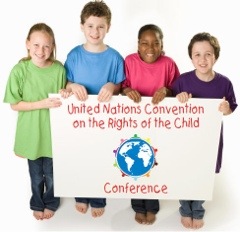
    20120517-165845.jpgDeveloped in 1989, the United Nations’ Convention on the Rights of the Child is an international set of standards and obligations that sets forth the full spectrum of social, political and economic rights to be afforded to children. The U.S. has yet to ratify the convention. The only other U.N. member state to decline to ratify this international document is Somalia.

    As a result of the serious lack of academic and political attention paid to child human rights in the U.S., children frequently lack the protections they require and deserve. American society needs to experience a greater level of awareness and insight to the many violence-related issues affecting this vulnerable population.

    So, how can we accomplish this? Or better still, how can a U.S. center of higher education, as Penn State and Syracuse University are presently attempting, take on the task of addressing the sexual, physical and mental abuse of children in America and identify themselves as leaders in such a cause?

    Most U.S. colleges and universities currently lack comprehensive research and study programs directed to the rights of children. To a significant degree, such academic activity can be found at many international academic and research centers. Though Penn State should be commended for developing the Penn State Hershey Center for the Protection of Children, the current description of activities and participants is lacking in identifying international experts in the area of child abuse and/or child human rights.

    The challenge for American academic institutions would be to create progressive and new interdisciplinary initiatives focused on the human rights of children – An Institute for the Study of Human Rights of Children. The social sciences, medicine and law, as well as education, are just a few of the areas that can serve as the foundation to this U.S.-based field of study.

    Child human rights encompass more than just child abuse or child protection. An increased and deeper knowledge of the special issues that children face and how to create a safer society for them will ultimately be the best response to the child-sex scandals facing Penn State and Syracuse universities as well as our country.

    A simpler approach would be to investigate the accusations of abuse, change institutional policy, donate money to child protection agencies, lobby for a new law for better reporting processes, or develop a limited academic or research initiative.

    While each of these alternatives has its own merits, realistically, little more will be contributed to society in general. They will only serve as political or academic Band-Aids to a much larger societal wound.

    A holistic, educational approach based on the advanced study of the human rights of children may allow the U.S. to move ahead and be identified as a leader in terms of how we can most optimally care for and protect our children. It will assure a better and safer life for our children.

    A new, progressive, academic approach will increase the national sense of moral and social responsibility, filling the presently existing void in how we should respect, and, yes, honor our children by finally providing them with the safeguards they deserve.

    **This article was published in the Tribune Democrat on 1/6/12

    http://tribune-democrat.com/editorials/x1477841616/Matthew-Masiello-and-Jessica-Lynn-Kurtz-Child-protection-must-also-focus-on-human-rights