Author: MattMasielloMD

  • Support Florida Students – Pediatric Action Plan 1

    March 4, 2018

    Dear Colleague,

    Yesterday, the Florida Senate rejected a ban on assault weapons as well as an amendment to allow police to seize weapons from someone under domestic violence injunction. Two weeks ago, as the Parkland students were marching to their state legislature to plead for safer gun control measures, their politicians were in session voting to disallow any conversation or debate on the ban of assault weapons. The Governor of Florida had created incentives for gun manufacturers to move to Florida. Senator Rubio and the majority of his Republican colleagues in the Florida legislature have voted against any meaningful firearm safety legislation.

    In November 2018, the AAP is scheduled to hold its annual conference in Orlando. This is occurring as Florida students, themselves, are asking for people and businesses to boycott events and activities in Florida. Major corporations, businesses and investment firms have changed or are considering a change to their policies on supporting the NRA and/or banning the sale of assault weapons.

    I ASK YOU NOW TO DO SOMETHING THAT   WILL TAKE ONLY A MOMENT OF YOUR TIME. CALL, EMAIL, OR TWEET THE NATIONAL AAP OFFICE AND THE MASSACHUSETTS CHAPTER OF THE AAP EXPRESSING THE CRITICAL IMPORTANCE OF MOVING THE 2018 NATIONAL AAP CONFERENCE OUT OF FLORIDA TO A CITY THAT IS LEGITIMATELY AND DELIBERATELY ADDRESSING THE ISSUES RELATED TO THE USE OF FIREARMS.

    We must be more than an advocate for these students. We must now be an ally, walking and protesting beside these courageous teens and their families. It will take only a moment of your time to offer the clear message to politicians that pediatricians and our pediatric provider colleagues will be direct, firm and active in this effort. Letters and lobbying efforts certainly need to continue but we can do more. Saying “MOVE THE AAP CONFERENCE” will deliver that message. Thank you. PLEASE SEND THAT “MOVE THE AAP CONFERENCE” MESSAGE NOW. THE TIMING IS CRITICAL.

    For our Children,

    Matt Masiello, M.D., MPH, FAAP

    “MOVE THE AAP CONFERENCE” message to:

    The Massachusetts Chapter of the American Academy of Pediatrics

    781-895-9852

    chaggerty@mcaap.org

    @MassChapAAP


    American Academy of Pediatrics

    202-347-8600

    dmiller@aap.org

    @AmerAcadPeds

  • The Sexual Predator and Childhood Adverse Experiences: The Moore situation is worse than what is being reported. “Time, shame, secrecy and social taboo.”

    “The victimization of children is nowhere forbidden; what is forbidden is to write about it.”

    ― Alice Miller, Thou Shalt Not Be Aware: Society’s Betrayal of the Child

    In 1998, a large study commented on the health and social effects of adverse childhood experiences (ACE) over the course of a lifetime. It is an extremely significant report in that for the first-time researchers demonstrated the relationship between adverse conditions and experiences of childhood and how they would later affect the health and wellbeing of these children as adults. Three categories of adverse experiences were identified: childhood abuse, neglect and household challenges. Specific to the events taking place in Alabama, the abuse categories identified those adults studied later in life, who as children, were abused emotionally, physically and sexually.

    The population was mostly white, college prepared, and approximately 50 years of age. The interviews indicated that these predatory incidents are well concealed by “time, shame, secrecy and social taboo.” The adverse experiences were predictors of how these victims went on to experience more disease, more alcoholism, more drug use, higher incidence of suicide attempts and early death.

    As ACE increases so does the number of marriages, and unwanted pregnancies leading to abortion. Domestic violence increases by over 500 % and the likelihood of being raped by 900%. Adverse childhood experiences are responsible for half of all depression leading to suicide attempts, two thirds of rape cases, and 50% of domestic violence

    With an ACE score going from 0 to 5, alcoholism increases 5-fold, intravenous drug use 9-fold and suicide attempts 17-fold. A rising ACE score is responsible for 2/3 of alcoholism, and half of all drug use. These risk factors associated with ACE underlie the 10 most common cause of death in the U.S.

    It is no surprise then that these women are coming out now to reveal their terrible experiences. Physicians and public health professionals need to step up and give testimony to this fact of why women are revealing these negative experiences of their youth and doing so later in life. The reason for the timing of these revelations is based on multiple scientific studies since 1998. As the initial researchers at Kaiser Permanente and the CDC stated, individuals hide these feelings and this anger because of ‘time, secrecy, and social taboos.” These prominent figures that now have their political bully pulpit strike a nerve of courage in these women. The resiliency these women have developed to overcome these adverse conditions now allows them to speak up and be heard. We need to support them not only because of the credibility and corroboration of their stories but support them based on the science of what we now know about these experiences and how it affects their lives.  We cannot assume for one moment that the sexual abuse inflicted upon a 14 year old by one political figure has been the only negative and harmful childhood experience. We are living in America, the land where not all benefit from a safe home, adequate education and housing ,  optimal health care and an adequate wage. Adverse Childhood Experiences are the most basic causes of health risk behaviors, morbidity, mortality, disability and health care costs in America. Yes, these experiences are very different from those experienced by an adult. The sooner we realize this the sooner we can make appropriate decisions about the Moore’s of the world, and hopefully someday, about health care in America.

    Matt Masiello, M.D., MPH, FAAP


    “The truth about our childhood is stored up in our body and lives in the depths of our souls, and although we can repress it, we can never alter it. Our intellect can be deceived, our feelings manipulated, and conceptions confused, and our body tricked with medication. But someday our body will present its bill, for it is as incorruptible as a child, who, still whole in spirit, will accept no compromises or excuses, and it will not stop tormenting us until we stop

    evading the truth.”

    ― Alice Miller


    Reference:         Vincent J. Felitti, et al. Relationship of Childhood Abuse and Household Dysfunction to Many of the Leading Causes of Death: The Adverse Childhood Experiences (ACE) Study. Amer J Prev Med 1998; 14(4).

  • War – No Longer an Option

    “In the counsels of Government, we must guard against the acquisition of unwarranted influence, whether sought or unsought, by the Military Industrial Complex. The potential for the disastrous rise of misplaced power exists, and will persist. We must never let the weight of this combination endanger our liberties or democratic processes.” – Dwight D. Eisenhower, 1961

     “It’s a growth industry and we will get what we want.” – General David Petrius.

    (When recently asked about the need for the deployment of more troops to Afghanistan.)

     “The question in my mind is how many additional American casualties is Saddam worth? And the answer is not very damned many.” ~Dick Cheney (Speaking to the Discovery Institute after the first Gulf War, on 8/14/1992, when Secretary of Defense.)


    As we came to the end of our walking-wheel chair trek from the Jefferson Memorial, Korean and Vietnam War Memorials and finally to the World War II site my 82 year old mother offered a most surprising comment. And this was from the wife of a WWII veteran who was awarded the Silver Star and a Purple Heart for his heroism. “We Americans sure like our wars”, she sadly stated from her wheel chair. It was that simple comment that made me pause and reflect on where we were as a society, a country. I am also the sibling of a two tour Vietnam War veteran. Thousands of our young died depriving us of a social force that may have brought us to a more peaceful, a more academically enlightened and possibly a more environmentally friendly time decades later. Dwight Eisenhower said it best when he commented on the need for war to “prevent” communism, terrorism, or world domination. “When people speak to you about a preventive war, you tell them to go and fight it. After my experience, I have come to hate war.”

    As thousands of our young soldiers have died in this war many more thousands have returned with a multitude of war related illnesses. And as we were under prepared to properly equip and protect our soldiers on the battlefield so are we now so ill prepared to care for these young Americans, their children and their wives upon their return to our communities. And, again, another generation lost and a country missing out on what could have been,  if these thousands of young men and women were here today, healthy and alive. The compromised physical and mental health of these thousands of young soldiers will have an immeasurable toll on their families, our health care system and our country for years to come. “The time not to become a father is eighteen years before a war”, so says E.B. White.

     A conservative number of 100,000 thousand innocent Iraq and Afghan men, women and children have died in this war. An apology and a few thousand dollars is offered as a payment of loss of home and life.  For generations, the families of these innocent victims will hold us accountable for their sadness, misery and loss – A breeding ground for sustainable acts of terrorism.

     “And one of the things we should learn is you can’t fight and win a civil war with outside troops, and particularly not when the political structure in a country is dissolved. So it wasn’t the press that was the problem. The problem was that we were in the wrong place with the wrong tactics.” –

    Robert S. McNamara, (Former Secretary of Defense for two presidents who acknowledged that he and his colleagues were “wrong, terribly wrong” in the prosecution of the war in Vietnam)

    One in eight Americans and one in four children now rely on food stamps and the number is growing. Sixteen million people are out of work and this number is also is growing. We have more families and children living in poverty now then we did during the Lyndon Johnson war on poverty era. In the U.S., a child is born into poverty every 33 seconds (Children’s Defense Fund, CDF). As we continue to experience the numbing greed of Wall Street, we have more children going to bed hungry than ever before. The economist Jeffrey Sachs, tells us that “Wall Street takes more bonuses each year then the U.S. gives in all official development assistance.” In this United States many of our community food pantries were finding it difficult to keep their shelves well stocked for this past Thanksgiving Day and quite possibly for the upcoming holidays and holydays. “Food-stamp beneficiaries aren’t them; they’re us,” states James Weill, President of the Food research and Action Center, on an analysis of 30 years of data that found nearly half of U.S. children and 90% of black youths will have to depend on food stamps at some point in their childhoods (Time magazine, Nov, 16, 2009). Since 2001 more then $950 billion has been spent on the war. According to Marian Wright Edelman, President of the CDF, it will take $105 billion over ten years to provide maximum health care reform for children. What is the child worth? Who are we?”

                 As our health system is fragmented and failing, our educational system is also suffering. The U.S. high school dropout rate is unacceptable by anyone’s standards. Our science and math scores are noncompetitive at the international level and the ability of our students to obtain a degree once they enter college is surprisingly and sadly low. Our children still do not have the right to an education and health as is the case in other modern, industrialized countries where health outcomes are significantly better than that of the U.S. Our young adults leave their educational environment thousands of dollars in debt before they have their first job offer. This is not the case in the great majority of other modern societies. We still abuse children by the hundreds of thousands, with one in ten suffering some form of maltreatment.  More than 10,000 children died from abuse and neglect in the U.S. from 2001 through 2007. “It is an alarming statistic, and the real number could be twice as large because many deaths from abuse or neglect are attributed to other causes,” states David Finkelhor, University of New Hampshire. Thousands of children go to school every day in this country and feel unsafe and feel that they have not one friend. On our city streets, playgrounds, and in our schools, children are victims of what the world sees as our strange approach to firearm ownership. According to U.S. Attorney General Eric Holder, sixty percent of our children are exposed to violence in their lifetime. “It is a ‘toxic’ stress to them. Children are exposed to a level of violence that we would not ‘tolerate’ as adults.”

    This month nations are staging special events to mark the 20th anniversary of the Convention on the Rights of the Child, which came to be on November 20, 1989. It is the most widely ratified international human rights treaty. Every country in the world, with the exception of the United States and Somalia, has ratified it.

    Poverty breeds social unrest and violence. Though we need to be intelligently and morally responsive, militarily, to terrorism, the real war to win is that on poverty. Our military experts are now negotiating with the Taliban, realizing that they fight for food and money, regardless of who pays. According to Sachs’, it will take one tenth of one percent of the world’s gross national product to provide basic financial support to the worlds’ poor; and $35 billion, total, as compared to the hundreds of billions being spent on the war effort, to significantly and positively alter the course of world poverty.

    This has been a war where some of our most esteemed politicians, like Colin Powell, stated that misleading and false statements were used to encourage entrance into this conflict. Even those endorsing on-going support for the war admit that it may take five or more years of military involvement. In other words, another generation of youth subject to the decisions we will make today. When General David Petrius, the overall commander of U.S military forces in Iraq and Afghanistan, was recently asked about the need for more troops his response was the following: “It’s a growth industry and we will get what we want.”

    Many Americans are now approaching that Viet Nam mindset of war weariness, and at a time when we are in a deep economic depression. There is discussion of a ‘war tax” just as we are realizing the cost to overhauling of our health care system; upgrading our educational system and moving to cleaner, more efficient energy sources. It is also the poverty, the hunger and the declining spirit of the masses. “The most successful war seldom pays for its losses,” so states one of our Founding Fathers, Thomas Jefferson.

    “Peace is not absence of conflict; it is the ability to handle conflict by peaceful means”. -Ronald Reagan

     This country has a “machine” as strong and powerful as our military machine of generals and war strategists. “Give peace a chance” should no longer be a cliché of the past. Today, we are much better prepared to call upon and muster nations, experts in international economists and community planning; sociologists, educators, medical and public health professionals, and known political peace makers who can strategically infiltrate a society in conflict, or a country experiencing massive poverty and reap significant gains, with significantly less loss to life. And, yes, there is actually a United States Institute of Peace, located in Washington D.C. The challenge is being proactive in inserting new and different voices into the national conversations of conflict and war. It is time for a new world order.

    Whether it be with the advice of  John Kennedy, “Mankind must put an end to war, or war will put an end to mankind,” or  General Douglas MacArthur when he courageously stated: “I believe that the entire effort of modern society should be concentrated on the endeavor to outlaw war as a method of the solution of problems between nations,” it is now that moment in the history of our country, at this place in time, to speak out, peacefully protest, write and stir the spirit of this country.

     May we never confuse honest dissent with disloyal subversion. ~Dwight D. Eisenhower


    War will exist until that distant day when the conscientious objector enjoys the same reputation and prestige that the warrior does today. – John F. Kennedy
     
    War should be the politics of last resort. And when we go to war, we should have a purpose that our people understand and support.  – Colin Powell


  • Health is Everywhere

    BY MATT MASIELLO, MD, MPH
    Often times the feeling is the opposite; it is illness that is everywhere, not health. With the U.S. population experiencing a continuing surge of chronic illness, costing this country, we Americans, 80% of the money we spend on health, why should we think that illness is not here to stay. Sadly, the U.S. is not leading the international charge in maintaining and sustaining maximum health for all citizens. The present generation of U.S. children could be the first to have a lower life expectancy than their parents’. Forty-six-plus million individuals in this country live without health insurance and that number will only grow as the economy suffers.

    Sick Around the World,” a Public Broadcasting Station (PBS) documentary, reviewed the stark comparisons between the health care systems of several countries to that of the U.S. The one interesting question asked of the health care leaders of the five countries was: “Would a citizen of your country ever go bankrupt over a hospital bill?” The response was “not possible” or “never,” along with a facial expression of surprise and wonder that the question was even asked. When the small country of Taiwan had the opportunity to re-invent their health care system in the 80s they identified the advice of those countries considered to have the best health systems. When asked, and again with a polite pause in the conversation, the Taiwan spokesperson responded that the U.S. was not one of those countries.

    These countries certainly have issues and obstacles in providing the very best health care. However, “health” is considered a human right and thus they are committed, through political will and leadership, in making it work.
    Ilona Kickbusch, a well-known health care author and academician, who has worked and lectured on both sides of the Atlantic, speaks of the roles of hospitals in the “health society of the 21st century.” At the 2007 World Health Organization-Health Promoting Hospital Network (WHO-HPH) meeting in Vienna, Austria, she eloquently and simply stated that “health is everywhere.” And in that environment she describes the important role of hospitals in identifying and utilizing “health.” Health care professionals from around the world gathered at the annual event to discuss how hospitals can identify themselves as public health advocates for their patients, hospital staff, community and environment. David Ollier of Hospitals and Health Networks wrote of the minimal participation by the U.S. in the international organization in his 2007 article, entitled “American Exceptionalism,” where he comments on “where one is a lonely number.” Nicely, so that “one” (hospital) is in Pennsylvania.
    The WHO defines health as “a state of complete physical, mental and social well-being and not merely the absence of disease and infirmity.” In the U.S. we do a good job in curing diseases and treat illnesses for some, not all. We are less proficient in the area of hospital based disease prevention, health promotion or public health or public health advocacy.

    So, what can U.S. hospitals and health care systems do to realize and benefit from the fact that health care can also be everywhere? First, there is the issue of leadership. We need a different type of health care leader. Hospital CEO’s, Presidents, Trustees should have training, experience, background and appreciation of the broad social and health issues of our day, as well as manage the day to day operations of the health care system. These new health care leaders must find that common ground of how hospitals can obtain the optimal profit margin as well as strategically serve as public health advocates for the communities they serve. Second, the international arena is the “health” classroom where we can learn. If we have the desire, fortitude and leadership to redesign our U.S. health care system our hospitals, managed care organizations and political leaders must make the effort to identify this new health care leadership as well as reach out internationally for this level of expertise. The WHO-HPH network would serve as a viable resource.

    According to Ilona Kickbush, hospitals must begin to live in the four domains of health – medical health, personal health, public health and the health market. In the health market alone, she describes 18 categories of potential activity. To participate and excel in these activities a new kind of political and health leadership must rise up and be able to speak beyond the important but limited topics of “access to care”, “health insurance for all”, or “reimbursement for clinical services.” For the U.S., we need to strategically create the balance between the attention and funding we provide for treatment of chronic illness and technology and the more encompassing “health society” of health promotion, wellness and disease prevention. As steam was an economic driver in the 1800s, steel in the 1850s, electricity in the early 1900s, the automobile in the 30s and information technology in 2000, health must become the driver in the decades to come. Kickbush and others have commented on these comparisons, with wellness, health promotion and medical technology as being the economic driver for 2050.

    And lastly, we must also be willing to retrain our health care professionals. Though we may need more nurses at the bedside of our hospitalized citizens we also need nurses, as well as physicians, who are trained to “clinically” promote the health of the patient beyond that of the hospital bed and back to their homes and work places. Europe, Asia and many other countries are forging ahead on these health care practices. We must work to change how we do health in America.
    It is time we counter the impression and opinions of others by reflecting upon a quote from Winston Churchill: “Americans are a wonderful people in that they always find the right answer…after they have tried every wrong answer first.” We can do better, we must do better, and we must find the right answer to better health.

    Dr. Matt Masiello, Director, The Center for Health Promotion and Disease Prevention, Windber Research Institute & Windber Medical Center, and Project Coordinator (U.S.-based), International HPH Network, World Health Organization-Collaborative Center (WHO-CC), Copenhagen Denmark, can be reached at m.masiello@wriwindber.org or (814) 619-6168

    4 December 2008 http://www.wpahospitalnews.com HospitalNews

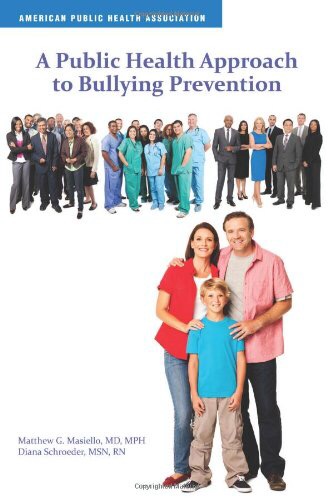
  • A Public Health Approach to Bullying Prevention

    A Public Health Approach to Bullying Prevention will serve as a practical, sustainable, cost-efficient strategy to tackle bullying. More importantly, it may be the best approach to providing legitimate and sustainable hope to our children at a time when bullying is becoming increasingly more difficult to tackle.

    This book presents a public health approach to bullying prevention in a comprehensive and deliberate manner. Formal public health strategies have been used to combat infectious disease epidemics, tobacco use, and motor vehicle injuries. When applied to bullying, public health strategies provide a scientific approach to community planning, the use of evidence-based programs, coalition development, and the ability to change the culture in a school and community to one that is positive and strong. This text will serve as invaluable resource to parents and professionals looking for advice on specific facets of school-based bullying.

    Available on Amazon: https://www.amazon.com/Public-Health-Approach-Bullying-Prevention/dp/0875530419

    A Public Health Approach to Bullying Prevention is a valuable resource on how to assess, apply, and evaluate public health interventions to reduce bullying and violence in schools. Anyone intending to launch a bullying prevention program should begin by reading this book. —Donald S. Burke, MD, Dean, Graduate School of Public Health, University of Pittsburgh


    #MattMasielloMD

  • Education in America / Education in our Communities

    In her book, The Death and Life of the Great American School System, Diane Ravitch presents an informative and historical review of how our national school system has changed and not for the better. Over the past twenty years she had the opportunity to work on both sides of the political fence, and, while in either respective camp; she initially felt that the policies were generally good. With input from other educators the policy makers at the state or federal levels were able to implement school based improvements into curriculum or introduce vouchers or approve charter school development. No Child left behind (NCLB) legislation was one such example. Ravitch and other independent educational researchers now conclude that in very large part these politically formulated initiatives failed.

    Thirty to fifty years ago, U.S. students were competing against other U.S. students. This is no longer the case. According to Bill Gates, by 2020, 123 million U.S. jobs will be high skilled and high paying with only 50 million American college students qualified to fill them. Clearly, American high school students are no longer in competition with only their American peers, but are now competing with their international counterparts. The University of Pittsburgh recently stated that they are determined to have their students compete internationally. However, this process cannot begin in our colleges and universities. Finland starts with early education, a universal health plan and all children having the right to an education. In addition, special education opportunities are available for all students not just those with mental health, intellectual or physical disabilities. Prior to the 1970s, American public schools were the best in the world, producing Nobel Prize winners, U.S. Presidents, and CEOs. Unfortunately, this is no longer the path we are on. Of 30 developed countries, the U.S. ranks 25th in math and 21st in science. Similarly, our top 5% of students rank 23/29 when compared to developed countries.

    The cost to educate a child in U.S. has doubled since 1970. Student reading and math performance scores, however, have been flat over this same period of time. Nonetheless, over the decades, the one saving grace has been the teacher. Educational experts tell us that with high performing teachers, students progress three times faster than their counterparts. With poor performing teachers the reverse occurs. As told in the powerful documentary, “Waiting for Superman,” it is estimated that if we can eliminate the lower 10% of our poorly performing teachers the average U.S. student could potentially reach the academic level of a Finn student. Finland presently has the best student academic performance rating in the world. Teachers in Finland receive the best education and have the freedom to teach without the burden of onerous standardized testing and ill-defined paperwork. These educators are well paid and evaluated frequently by their academically stellar mentors. In fact, the Finn teaching profession is held in higher regard then that of medicine, law or engineering.

    The studies have demonstrated that despite the failures we have experienced in trying to turn our schools around with No Child Left Behind (NCLB), cyber or charter schools, vouchers, etc., researchers have been able to define what does work. Quality teachers, more class time, academic accountability, and high curriculum standards are the mainstay of quality education in many countries with better student performance.

    As a nation we have not seen meaningful improvement in the academic performance of our students with the use of vouchers or the development of charter schools. There are exceptions, however. The New York charter school designed by Geoff Canada, an educator, or the KIPP (Knowledge is Power Program) schools, also developed by educators. With only a few exceptions, we have not benefited from voucher or charter schools. Though the concept for both or either was initially good and well-received the great majority were not advanced by educational leaders but by policy makers and for profit non-educators. Money was pulled from the community public school system budgets and a few market driven school managers, not educators, made some very nice incomes. Though some charter schools may have demonstrated a small, positive blip in student test scores, a great many saw a plateau or a decrease in scores. Vouchers were not used when available. Not all families with children failing academically in their failing schools can afford the time or money to transport their child across town to a carter school. Many charter schools either folded or became academies for the upper middle class or rich of the city or community. As sadly depicted in Waiting for Superman, it is not quite that Norman Rockwell American scene when an auditorium full of our economically challenged minority families are waiting for, and many losing out, in a local charter school lottery. In paraphrasing an educational consultant from Finland, “the poverty in America prevents me from conveying our successes in Finland to the American educational system.”

    The NCLB legislation only tests for the achievement of basic knowledge in math and reading and not in science, history, language and geography. NCLB is testing for proficiency, not excellence. The legislation has negatively affected the lives of millions of American children and for years to come. As teachers worked hard on preparing children for the NCLB tests they were taken away from teaching the other important courses. Today, the studies are showing how NCLB is not working in many of our schools and certainly will never raise us to international competiveness. This week it was announced that ten states have opted out of the NCLB mandates because we have not been able to reach high academic standards with NCLB. The same legislation was supported by both democrats and republicans. Sadly, a republican candidate for U.S. presidency now publically states and apologizes for voting for NCLB. “It was against my principles I believed in….sometimes you take one for the team.” At least he apologized. He, however, is now different from ill informed school board members, local politicians and local taxpayers who feel that they now can make a legitimate contribution to my children’s education and future livelihood.

    In those communities across America where lawyers, business leaders or policy makers were asked to come in as school superintendents, many of these communities eventually saw less than stellar results, significant money spent, parent anger and an exodus of good teachers. Teachers are not business people. They do not like to be bullied, as many were in California and New York, by a superintendent or chancellor who was not an educator or a school board and city politicians who put money and test results over curriculum. Across America, communities such as mine are being challenged with the fact that our schools are losing their prominence as the foundations to their neighborhoods. Somehow we accept the fact that the politician can create a law that could essentially close a school or at the very least give parents the strange opportunity of sending their children to another school. It is easier said than done for most parents struggling economically but not so for the politician who is receiving that weekly check and guaranteed health insurance. Whether it is due to the disgruntled taxpayer, that latest educational politician, the micromanaging school board or the school union educators are losing their hold on their schools. Some of this is deserves, most not. At the very least if we do not resurrect the credibility and leadership of the educator with the educators leading the way our national educational system will continue the international slide to mediocrity and failure.

    So, what is our obligation to our children? To the benefit or demise of our educational process to what degree do teacher unions, school boards, and taxpayers direct the educational process in our communities and in our country? Do we do the right thing to turn this educational process around or the money saving thing? Do we have the fortitude? Bill Gates offers the challenge that “The status quo can change. It will take a lot of outrage and a lot of good example”. But unlike big business you cannot turn things around in a year or two. How do we deliberately change and enhance the initial and ongoing education of our teachers? The educational motto in Finland where the students have the highest performance internationally and spend less money to do so, is “good teachers, good schools.”

    According to several nationally recognized educational experts, school boards need to make sure their school has the best superintendant, the best teachers, the best business manager and, most importantly, the best curriculum. They need to do their best to show the community of parents, teachers and taxpayers that they are doing their job, which is to educate our children to be the best in the world. School boards need to prevent politicians and the mob of educator wannabes from taking over the responsibility of educating our children and let their academic leadership do just that, lead. Teachers should be evaluated by excellent mentors and not by test scores. They need to continually research their field of education. A testing process developed by politicians does not work. Massachusetts apparently stands out here in the U.S. as doing it right. We may not have to go to Finland to learn all of what we need to know to get it right in America. Schools, parents, school boards, school districts, communities, counties and states must work with and support the educational leadership in order to fix, enhance and sustain community public schools.

    Foundations, hospitals, colleges, universities and businesses need to redefine their mission, charitable giving and grant processes. Do they fund the many popular but ill-defined specialty projects or do they fund education? Teacher research opportunities, teacher mentorship initiatives and teacher incentives to obtain the best education possible would be a great start in the redirection of individual and corporate wealth and foundation grant activity. With this in place, we can then test our students, but let the teachers do the testing, not you, me or the politicians. When Bill Gates was asked what would be the single thing to do to improve the American school system his reply was, “hire great teachers, more than money spent on anything else, more than technology……..”

    But unlike big business you cannot turn things around in a year or two. How do we deliberately change and enhance the initial and ongoing education of our teachers? The educational motto in Finland where the students have the highest performance internationally and spend less money to do so, is “good teachers, good schools.”

    According to Ravitch, “schools should be the anchor of our communities; and effective education requires enormous effort with collaboration and consensus at many levels.” History tells us that schools will not improve if elected official intrude into the territory of curriculum and make decisions that should be made by professional educators. Though some market driven, educational arm chair experts may consider principals to be middle management personal, historically; this has not been the case. The principal should be that “head teacher” evaluating teachers and helping them to teach well and prompt them on to be the best at what they do – teach. If that teacher or principle is not there yet, we can surely help them get to that point of excellence.

    Matt Masiello

    Dr. Masiello is a pediatrician and public health professional. Over the past twenty years he has worked extensively in school systems and communities as a pediatrician and health consultant. Dr. Masiello has also written and presented nationally on the rights of children.